Duo Bruyères: Notes al Programa 2014

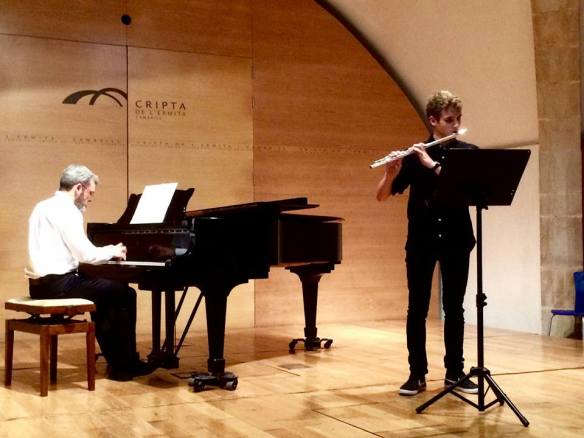
Amb el concert que el Duo Bruyères presenta durant el 2014 pretenem fer música més enllà dels nostres instruments. És per això que hem escollit un programa del nostre gust, independentment de que les obres que el conformen fossin o no escrites per a flauta i piano originalment; explorem així repertori per a violí i piano, piano sol, piano a quatre mans o per a flauta i orquestra, arranjat per al nostre tipus de formació. La intenció és que el públic conegui aquesta música i la gaudeixi tant com ho fem nosaltres.

Per començar, combinem l’elegància i la gràcia de la “Sonata per a violí i piano núm. 25 KV 301 en Sol Major” de W. A. Mozart (1756-1791), en una transcripció del Duo Bruyères, amb l’intimisme i la suavitat del “Romance” d’Arthur Honneger (1892-1955), compositor suïs que va formar part del grup francès “Les Six”. Sense moure’ns de França, la subtilesa i els colors de Claude Debussy (1862-1918) estan representats amb dos preludis originals per a piano sol, arranjats per Peter Kolman: el que obre la “Suite Bergamasque” i “Bruyères”, del Segon Llibre de Preludis. La poesia i la fluïdesa impressionista ens va fer pensar en el català Eduard Toldrà (1895-1962) i el seu “Sonetí de la Rosada”, per a violí i piano i també transcrit per nosaltres, per acabar la primera part.

La segona part es composa de tres obres a través de les quals podem copsar aspectes diferents del Romanticisme musical. Carl Reinecke (1824-1910), àmpliament respectat als cercles musicals del moment, fou juntament amb Max Bruch un dels màxims representants del conservadurisme musical de reminiscències mendelssohnianes de finals del s. XIX. Tant la seva “Ballade op. 288” per a flauta i orquestra, com les “5 Danses Espanyoles op. 12 per a violí i piano”, originals per a piano a quatre mans i arranjades per Ph. Scharwenka, del polonès Moritz Moszkowski (1854-1925) s’allunyen del tipus de composició per a flauta majoritària en època romàntica, la de l’obra de lluïment escrita pel mateix virtuós-instrumentista i destinada a ser interpretada per ell mateix. Aquest seria el cas de la “Fantasia Brillant sobre “Carmen” de Bizet”, de François Borne (1840-1920), per a flauta i orquestra, que tanca el recital.

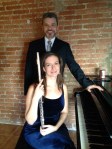
la foto (3)DUO BRUYÈRES: Isabel Serra (flauta) i Andrés Moya (piano)

Properament, Nimbus Duet

Amb el seu programa 2014 Nimbus Duet ens aproparà un repertori de música de cambra per a flauta i guitarra basat en obres inspirades en la música folklòrica i popular. A través de les diferents peces, viatjarem a Romania i Hongria, ens traslladarem des de l’antiga dansa cortesana fins a la suggerent havanera i els tangos ens portaran a culminar el concert amb ressons andalusos. Un programa inspirador que farà gaudir al públic tant com ho fan els seus intèrprets.

DSCF4138

Música de Benjamin Britten a l’entrega de Premis de Fotografia i Poesia de Cambrils

Música de Benjamin Britten a l’entrega de Premis de Fotografia i Poesia de Cambrils.

C. Debussy, Prélude de la Suite Bergamasque, arr. P. Kolman

Video

Duo Bruyères:
Isabel Serra (flauta travessera)
Andrés Moya (piano)

Assaig 14/11/13 – Ensayo 14/11/13 – Rehearsal 14/11/13

FITXA TÈCNICA

Tipus d’espectacle: Recital de flauta i piano 

Durada aproximada del concert: 1 hora 30 minuts (pausa inclosa)

Requeriments tècnics: Piano vertical o de cua

Catxet: A concretar

Contactar:

Andrés Moya Moya: 609 59 13 01 / andres@artesaniaflorae.com

Isabel Serra Bargalló: 977 22 07 46 / 669 29 96 25

serrabar@yahoo.es

https://isabelserrabargallo.wordpress.com/

http://www.facebook.com/isabel.serra.505960

es.linkedin.com/pub/isabel-serra-bargalló/33/30b/563

PROGRAMA de CONCERT

Duo Bruyères

 I PART

Sonata núm. 25 KV 301 ………..….. W. A. Mozart (1756-1791)

Allegro con spirito

Allegro

Romance …………………………………. A. Honneger (1892-1955)

2 Preludis …………..………………………. C. Debussy (1862-1918)

Bruyères (dels Préludes II)

Prélude (de la Suite Bergamasque)

Sonetí de la Rosada ……………………… E. Toldrà (1895-1962)

II PART

Ballade op. 288 ………………………… C. Reinecke (1924-1910)

5 Danses Espanyoles op. 12 …… M. Moszkowski (1854-1925)

Allegro brioso

Moderato

Con moto

Allegro commodo

Con spirito (bolero)

Fantasia sobre “Carmen” de Bizet” … F. Borne (1840-1920)

CURRICULUM VITAE

ISABEL SERRA

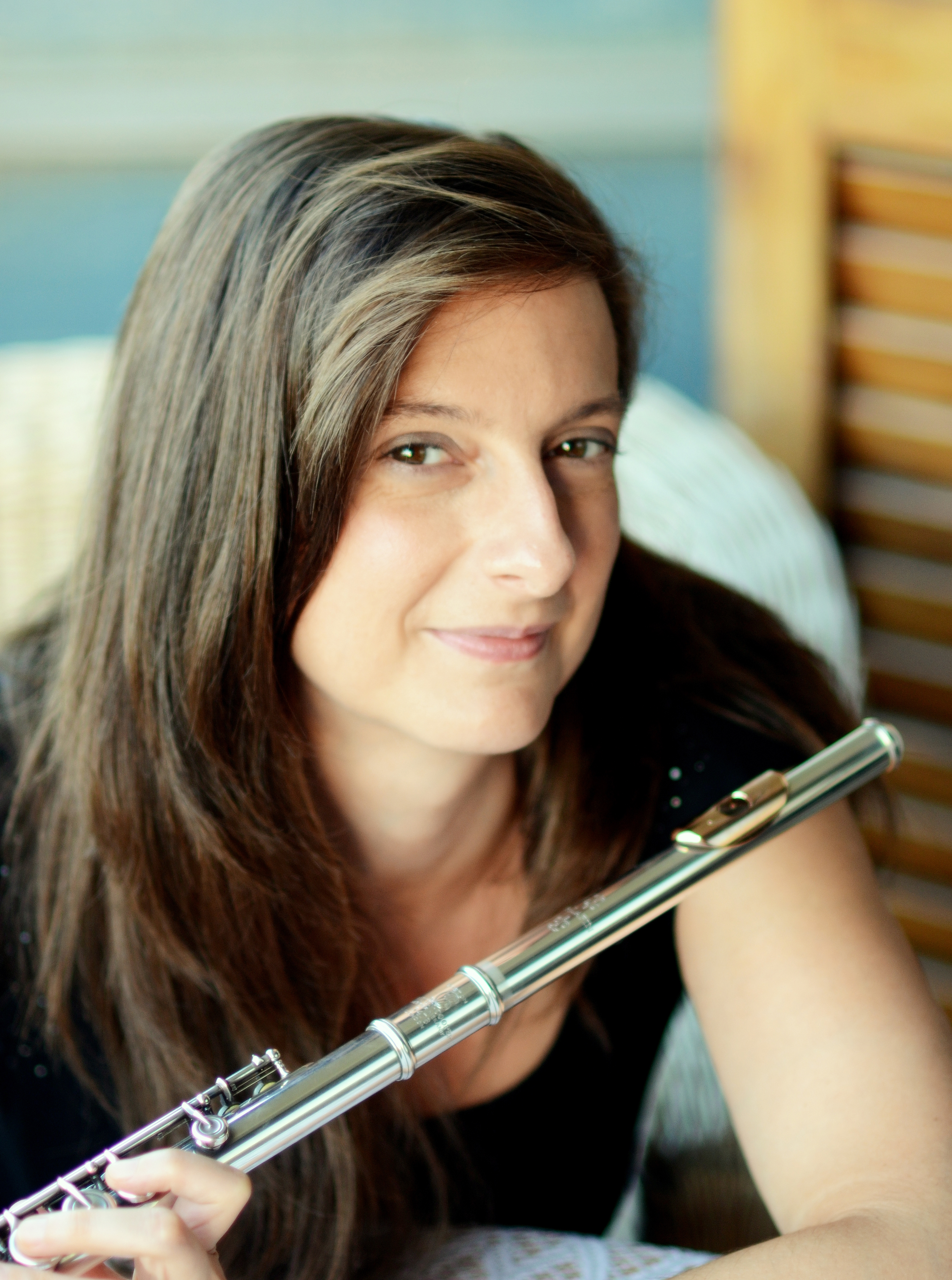
Amb flauta al balcó

Nascuda a Reus, inicia els seus estudis musicals al Conservatori de Tarragona on finalitza el grau professional amb les màximes qualificacions. Obté el Títol Superior de flauta al CSMM de Barcelona, i posteriorment el Postgraduate Diploma in Orchestral Training (2000) i el Master Degrée in Music Performance (2001) a la Guildhall School of Music and Drama de Londres.

Els seus mestres han estat Robert Sirvent, Magdalena Martínez, Jaime Martín, Philippa Davies, Paul Edmund Davies i Samuel Coles. Ha realitzat cursos de perfeccionament amb Vicens Prats, Emily Beynon, Peter-Lukas Graf, Meinhart Niedermayr, Roberto Fabbriciani, William Bennett, Sir James Galway, Willy Freivogel, Aurèle Nicolet, Katherine Hoover, Riccardo Ghiani, Aldo Baerten i Álvaro Octavio.

Finalista al Concurs Permanent de JJMM d’Espanya (1993) i becada per aquesta mateixa institució en el Concurs de 1995. Ha obtingut altres beques i premis com els de la Fundació Yamaha-Hazen Europa (1997), JONDE (1998), Fundació Agrupació Mútua (1999), Generalitat de Catalunya (1999 i 2000) i “Sylvia and Dennis Forbes Award” (2000). Guanyadora del primer premi en el Concurs Nacional de Flauta “Donosti 99”.

Com a solista ha interpretat el concert “Il Gardellino” de Vivaldi amb l’orquestra de cambra “Camerata XXI”, el concert en La Major de C. P. E. Bach amb la Guildhall Strings Ensemble, el Concert en Do Major per a piccolo i orquestra de Vivaldi amb el Guildhall Early Music Group, el concert “La Tempesta di Mare” de Vivaldi amb l’Orquestra de Cambra de Vilaseca i la integral dels Concerts de Brandemburg de J. S. Bach amb l’orquestra Camera Musicae.

Ha estat membre integrant de la JONC i de la JONDE, i ha col·laborat amb altres formacions orquestrals com l’Orquestra Simfònica del Vallès, l’Orquestra de cambra de Vilaseca o Camera Musicae.

En l’actualitat és membre de l’Orquestra Simfònica Camerata XXI i compagina la docència musical amb l’activitat com a intèrpret de música de cambra. És llicenciada en Història de l’Art per la Universitat Rovira i Virgili de Tarragona.

ANDRÉS MOYA

foto andrés (2)

Format al Conservatori de Música de Vila-seca (Tarragonès) amb el pianista Cecilio Tieles i el compossitor Benet Casablancas i al CSMM de Barcelona amb la pianista Carme Vilà i els compossitors Xavier Boliart, Albert Sardà i Ramon Porter on obté el Títol Superior de Piano amb menció d’Excel·lent. També ha rebut classes de Música de Cambra del violinista Evelio Tieles al Conservatori del Liceu. L’any 1998 es trasllada a Lausanne (Suïssa) on obté el “Diplôme Supérieur de Piano” amb el pianista Christian Favre i a més entra a formar part del Cor de l’Òpera de Lausanne.

Novament a Tarragona perfecciona estudis de Cant amb la mezzosoprano Mercè Obiol al Conservatori d’aquesta ciutat.

Becat l’any 1986 per participar al Concurs Maria Canals de Barcelona i premiat per les seves intervencions pianístiques als concursos de JJMM Vilafranca (1984) i (1985) i al Concurs de piano Ciutat de Reus (1986).

Ha col·laborat amb l’Orquestra Pablo Sarasate i amb la Banda de la Unió Musical Senienca ha interpretat com a solista la “Rhapsody in Blue” de Gershwin. També ha acompanyant el Cor de Cambra Scherzo, el Trio “Ad Libitum” , el Cor de la URV, la mezzosoprano Mª Carme Duran, el baríton Pierre Pantillon i el contrabaixista Luis Cojal entre d’altres músics. Ha interpretat professionalment al piano a sales com el Conservatori de Paris, Pamplona, Lausanne, Palau de Música Catalana, Teatre Metropol, Auditori Felip Pedrell , Auditori Josep Carreras, etc.

Actualment forma part del Cor de l’Auditori Josep Carreras i acompanya a instrumentistes i cantants en recitals i concursos.

Major factors influencing on the onset and control of performance anxiety

By Isabel Serra Bargalló, Master Degree in Music Performance, Guildhall School of Music and Drama, London.

Puedes leer el artículo en castellano en el siguiente enlace:

Principales factores responsables de la aparición y del control de la ansiedad escénica
19396717_1479188068807193_1244090393369116816_n

There are many factors that can lead a musician to an anxiety situation before, during and/or after a performance. Not all individuals necessarily experience all the factors I will list here at the same time or in all situations. This is simply the written report of the shared experiences of a group of music students in a psychology class (Prof. Dr. Jane Davidson, Guildhall School of Music and Drama, London, Psychology for Musicians, 2001) to explain what generally makes them to get anxious about their playing in front of an audience.

The major factors influencing on the onset of performance anxiety developed in this essay will be the following:

  • Internal Factors:
    • Stage Fear
    • Sense of Failure
  • External Factors:
    • Critics
    • Lack of Preparation
  • Communication Problems
  • Physiological Sympthoms

A better understanding of each factor is also a route to control and solve performance anxiety. That is why it is worth for a musician to understand what makes him/herself to feel anxious about performing.

INTERNAL FACTORS

Classical music in western cultures has developed a high standard of musical achievement. This cultural elitism often detaches the musician with high levels of performance anxiety.

Two of the possible internal factors causing anxiety could be stage fear and the performer’s sense of failure.

Stage fear

Stage fear can arise from events in the past where the performance is remembered as significant of anxiety, humiliation or embarrassment.

It has been proved that good experiences with music happen when nothing is being asked from the individual. Positive experiences usually happen in a good environment, at home rather than at school, while listening rather when performing and with family or with friends rather than with a teacher.

Being made to perform in front of others, being critisised, being laughed at in the past… may lead the performer to feel anxious. This anxiety is even increased in some social situations such as recitals, where the music takes on an almost sacred character.

A possible solution to solve this fear could be to foment the performer’s strong wish to reproduce the inner feeling of good positive musical experiences in performance situations too.

Sense of failure

Like in sports, music teachers at primary schools are usually specially trained professionals with a supposed specific interest in the subject.  The same person teaches all the other subjects, but not music or sports. This relationship from the very beginning between the two subjects may produce a general social belief that music is a sort of competition.

The student will think that his/her performance is not good or enjoyable when others can perform at more advanced levels and will feel a deep sense of failure when performing. That is why it is important to foment a good musical self-image in the student. Every individual should notice its own progress above and beyond that of him/herself and not beyond that of the others.

Differences in experience, motivation, practice, interests, temperament, attentiveness… will make individuals to develop at different speeds. But only self-confidence is the route to achieve a high performance standard in music with no fear or sense of failure.

EXTERNAL FACTORS

Critics

Fear to an external factor like critics can be closely linked to an internal factor like sense of failure in a stressful performance situation like an exam or competition. It is also a fear to the teacher’s opinion.

The assessment of musical performance in Conservatories and Music Colleges is often based on the opinions of the music professors. They are allowed to firm pronouncements about the musicality of their students. But in music, final decisions can not be verified by being right or wrong beyond objective technical standards. The judgements of a professional are grounded in their own performance training, since other professionals have made subjective assessments on them.

Hence why the student should not be flattered by the opinion of a teacher or anyone else, as external judges can be extremely unreliable.

Lack of preparation

It has been found that the best and more confident instrumentalists accumulate double time of technical practice than the less able ones before the age of 21.

But preparation for a performance does not only mean to be able to perform a piece technically. A good performance has to be imaginative and expressive, with no anxiety.

In a stressful situation, nerves and anxiety may eliminate the expressive ‘micro-variations’ of the performance. Studies have shown that expressive performing becomes, in fact, more systematic with experience. In other words: expressive confident performance can be improved through practice, but it is a separate skill from the technical expertise.

Technical expertise is a matter of hard work, but this does not mean that anyone who works hard and regularly can become a confident player. What keeps someone relaxed and confortable in a recital is the pleasure and sense of fullness the instrument gives to oneself. Finding practice easy and pleasurable, enjoying music all the time will move the player to forget about anxiety in public performance.

COMMUNICATION PROBLEMS

The quality of a performance it is not normally evaluated in its technical ability, but in the more subtle features of expression.

A potentially good performer can lose part of the ability to communicate in a situation under high levels of anxiety, being erroneously judged by experts as ‘unmusical’. This will lead the player to consider him/herself as a less talented person and will add an extra factor of anxiety in the next performances: trying to be communicative.

But the correct route to achieve consistently appropriate expressive performances in a wide variety of situations can be only determined by experience. Should we then consider that communication problems in performance are due to a lack of preparation? Yes in some way…

It is clear that musicality is not a fixed attribute. Communication has a lot to do with engagement with music, which can be increased and developed in the hope of repeating once and again positive musical experiences (see ‘stage fear’) in the practice. The absence of an intrinsic focus (enjoying music, finding practice pleasurable) will prevent the musician to learn how musical structures affect the emotions during the preparation of the performance and the performance itself.

PHYSIOLOGICAL SYMPTHOMS

Tired muscles, too much tension, over relaxation, shaking… are all physiological symptoms which may cause anxiety to the performer. They are related to the performer’s arousal level.

Depending on how aroused is the player, the performance will achieve a different level of quality. A certain level of arousal is needed for good performance, as an under-aroused performer will not have enough energy to accomplish its task, while an over-aroused performer will not be able to feel calm and concentrated.

The performer has to develop certain strategies in order to achieve the right arousal level at the right time, which depends on its very individual characteristics. Being healthy and sportive may help to reach the best body conditions for performance.

BIBLIOGRAPHY:

Sloboda, Davidson and Howe, Is everyone musical?, The Psychologist, 7, 1994, 349-354

Exploration of the process involved in creating and developing a performance

21

Creating and developing a performance is not the same as learning and practising a piece. The preparation of a performance is the training that a musician does in order to make an interpretation of a piece of music in front of an audience.

It is very important to realise of the difference between playing and performing a piece. To perform (in classical music) means to play, as a result of a practising process, freely and with expression in front of an audience. Any instrumentalist can play, but the aim of the musician has to be expressing something through the music.

The performer should start wondering what is wanted from the audience to think about the piece and about the player itself. The purpose of a performance is to communicate, and to do so, the performer needs to feel what is wanted to communicate first and to have a very clear idea of what is the inner content of the music, in order to be able to exteriorise it.

Any performer has been some time in its life part of an audience. In other words, it has been a listener and enjoys music as well. When the listener becomes the player, it tries to reproduce the enjoyment of listening to music (this time making the music by its own), and to pass that feeling to others. A convincing performance is that one which makes the audience to have a good/bad/sad/happy… time through a confident and expressive playing.

As the composer’s messenger, the performer transforms something written into a paper into actual sound and expression. The music has then timing limits: it has a beginning and an end. The performer has to make the music say something in that space of time.

The performer is an interpreter of someone else’s ideas, and has to follow the wishes of the composer. Interpretation is not a matter of giving personality to music. Every performer is a different person, so playing the music with sincerity will be enough to bring to life a unique performance, different to any other.

In classical music, the key to be sincere in a performance (and therefore to please the audience and the player) is to have a perfect knowledge of the piece, and to be confident about its technical aspects. This will help very much to free from physical limitations and to allow the player to communicate freely.

The process of developing a performance

 1) Reading the piece (short time memory)

Before the stage of the final performance, there is a whole process of learning a piece: reading, memorising, understanding…

I have set here three primary stages, from the very beginning to the first sight reading lecture:

a)  General view of the score: How does the piece look like? Does it look difficult? Which style is it? Who is the composer? Is it very long? Which is its general structure?

b) More concrete view: key, bar, tempo, character…

c)  Reading of the piece with the instrument: sorting out the right notes, rhythms, dynamics, approximate changes of tempo…

At this stage the music has already been transformed into sound. Not still in a very communicative way or in the right tempo (sight reading tents to be slower in fast movements) and it is very difficult that a piece of music that has been played only once could be memorised. It still belongs to the short-term memory. The process that will bring the piece from the short-term memory to the long- term memory is called rehearsing or practising.

2) Practising and/or memorising (long term memory)

Rehearsing or practising is the intermediate step between the reading process and the real performance.

Some performers are not required to play from memory (specially wind players and chamber musicians). But for pianists, singers, string players… it is very important to start memorising while practising. As a flute player, I recommend very much to perform from memory. It gives the musician more freedom on the stage and helps the practice process to be done in a deeper way.

The steps at this point would be:

a) Locate the difficult passages.

b) Mark breathing points.

c)  Practice in separate bits.

d) Solve the technical difficulties.

e)  Bring the piece to the correct tempo/s.

f)   Memorise by visualising mentally the score, remembering the structure of the piece, the movement of the fingers and the name of the notes and its melody.

Any musician who is preparing a performance should take care of the expression while practising. One should never forget:

–     To see which different expressions can be found in the piece.

–     To give the music and expressive feeling.

–     To practice the technique which suits the different expressions.

–     To feel the expression as something personal and deep inside oneself, rather than something which is only for the audience.

3) Creating the performance

The piece has been already learned, practised and memorised. Some useful ways to prepare a performance are:

–     To reproduce mentally in the practice room the real performance situation.

–     To perform when possible for family and friends.

–     To listen to recordings of great performers realising of their palette of colours, dynamics and engagement capacity and to try to enlarge ours as well.

–     Going to concerts and observe how professionals behave in the stage.

–     Etc.

All this will make us to assume how pleasing can a performance be and to realise how lucky we are to have the chance to move and touch others through our interpretation.

By Isabel Serra Bargalló

Guildhall School of Music and Drama

Master Degree in Music Performance

Psychology for Musicians

Prof. Jane Davidson

London, November 2000

Música de Benjamin Britten a l’entrega de Premis de Fotografia i Poesia de Cambrils

El Grup de Flautes de l’Escola Municipal de Música de Cambrils participarà el proper dissabte 30 de novembre a les 18h a l’entrega de guardons del 26è Premi Internacional de Fotografia i del 3r Premi de Poesia, convocats anualment per l’Ajuntament de Cambrils. L’acte es durà a terme a la Sala de Plens.

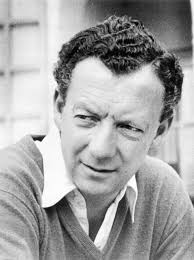
2013 ha estat un any de conmemoració d’aniversari de diversos compositors, Verdi i Wagner entre els més cel·lebrats. Però també cal recordar el centenari del naixement d’un compositor importantíssim i més recent, l’anglès Benjamin Britten (n. Lowestoft, 22 novembre 1913; m. Aldeburgh, 4 desembre 1976).

Britten

A més de compositor, Benjamin Britten va ser director d’orquestra i pianista. Figura preeminent de la generació britànica que va destacar just abans de la Segona Guerra Mundial, se’l recorda per obres cabdals com l’òpera Peter Grimes (1945), el War Requiem (1962) o la Guia d’orquestra per a joves (1946) entre d’altres. Britten també va escriure prolíficament per a amateurs i per a nens; aquesta vessant de la seva obra, lluny d’estereotips, potencia el millor de les capacitats dels intèrprets i suposa un repte per a ells.

En aquesta línia, el Grup de Flautes, integrat per Núria Pérez, Joan Manel Luque, Sandra Pallarès i Isabel Serra interpretarà una selecció de la Suite Alpina. Es tracta d’un conjunt de peces molt breus que representen escenes inspirades en l’estació d’esquí suïssa de Zermatt: l’arribada, el rellotge suïs, la baixada per la pista, les muntanyes, el comiat… També podrem escoltar la primera de les 6 Metamorfosis per a oboè sol, Pan, en versió de flauta sola, a càrrec de la professora Isabel Serra.

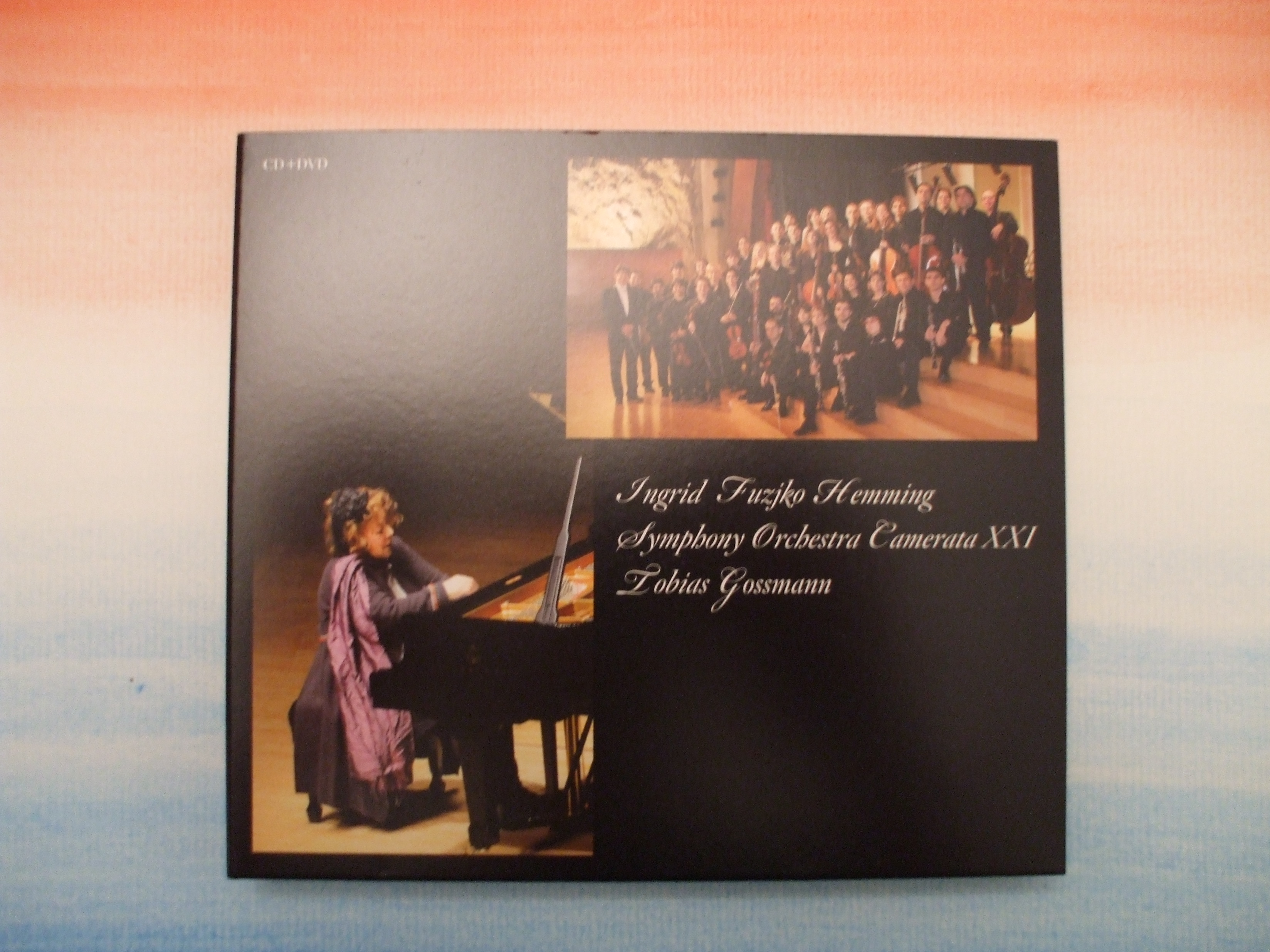
Ingrid Fuzjko Hemming, Symphony Orchestra Camerata XXI and Tobias Gossmann 2012 recording

It is important to me to remember constantly of how important and enjoyable is to give the 100% of oneself in the task of making music, whatever your place is it, and to feel lucky just to be a musician. That is why I was really touched today listening to Ingrid Fuzjko Hemming, Symphony Orchestra Camerata XXI and Tobias Gossmann 2012 CD for the first time. There has been a while since I had the wonderful chance to take my little place in this recording by playing a flute part in the orchestra. Finally, the materialised CD was given to me, one day before my birthday, as an unexpected present which makes me very happy.

Remembering of the recording sessions more than one year ago, and listening now to all the masterpieces by Delius, Mozart, Chopin and Dvorak in the CD, I feel extremelly proud of my colleagues and very grateful to every single person in the project, specially to Miss Hemming. She also invited Symphony Orchestra Camerata XXI to a Japan Tour in March 2013, an experience I will never forget too.

Thank you everyone!

DSCF4744


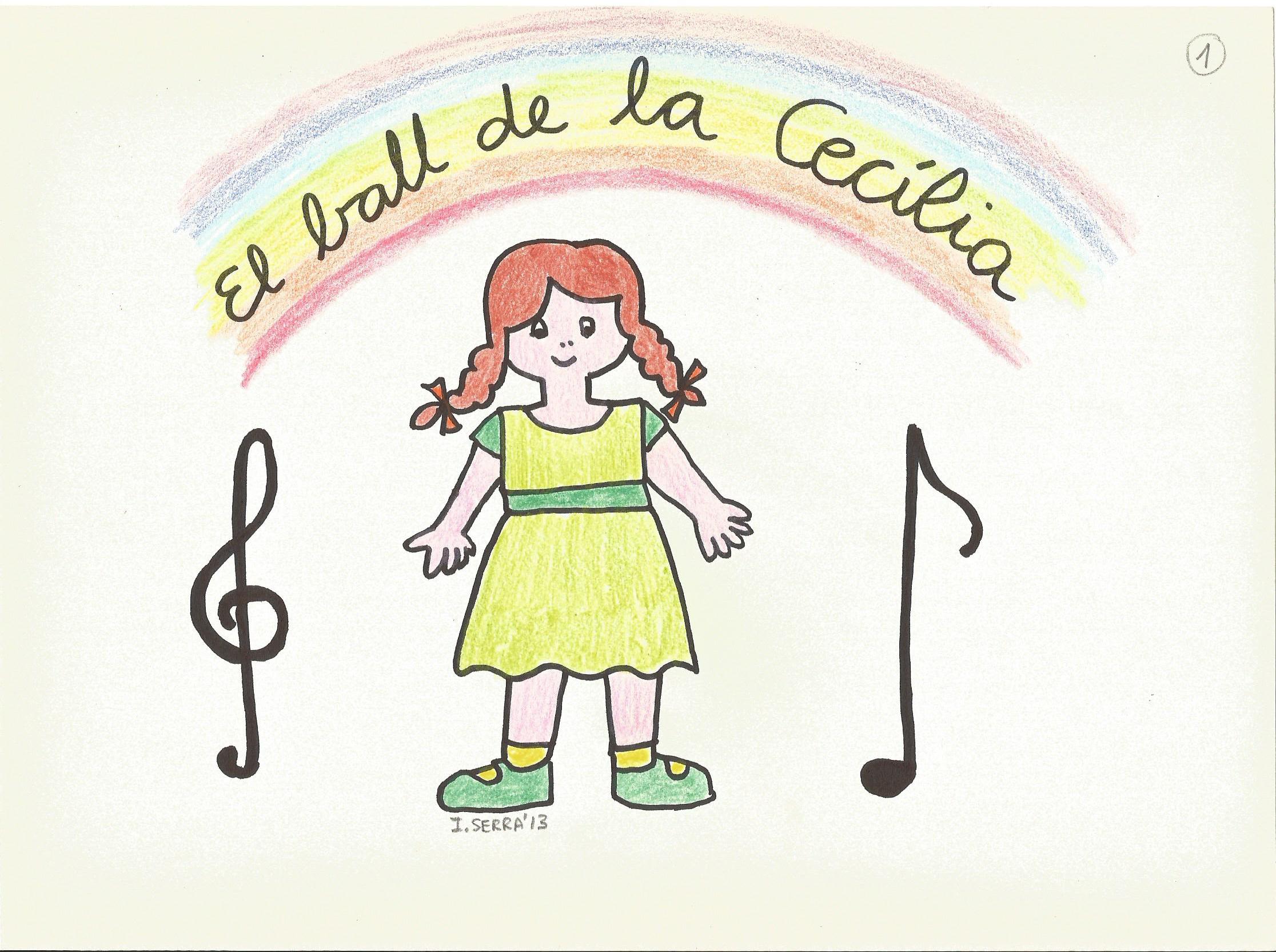
“El ball de la Cecília”, conte musical per a llars d’infants.

Ceci1

És una experiència nova i engrescadora per mi portar el conte musical “El ball de la Cecília” a la llar d’infants Pineda Centre d’Educació Infantil de Vilaseca el proper 22 de novembre. La proposta va sorgir de la mà de Montserrat Franco, de l’Associació de Mares i Pares Pineda Centre d’Educació Infantil, per tal de poder celebrar amb els més petits la festivitat de Santa Cecília i apropar d’aquesta manera als nens el meravellós món de la música a través de la flauta travessera.

Ceci3

Idea, text, música i imatges han anat sorgint successivament; per a aquesta ocasió la Montserrat i jo hem adaptat el text del conte “El ball d’Helena” que vaig escriure per a nens de 4 i 5 anys fa un temps per a ser assimilat per infants d’entre 0 i 3 anys. La creació dels dibuixos que acompanyaran el conte ha suposat també un repte que he afrontat amb molta il·lusió. La Montserrat serà l’encarregada del muntatge de les imatges i de la narració, mentre que jo hi posaré la música amb la flauta.

Esperem que el projecte agradi als infants, i que el conte pugui ser portat a més centres en un futur. Us mantindrem informats!!

Ceci7